
AI sales agent on WhatsApp: what it does and what it doesn’t
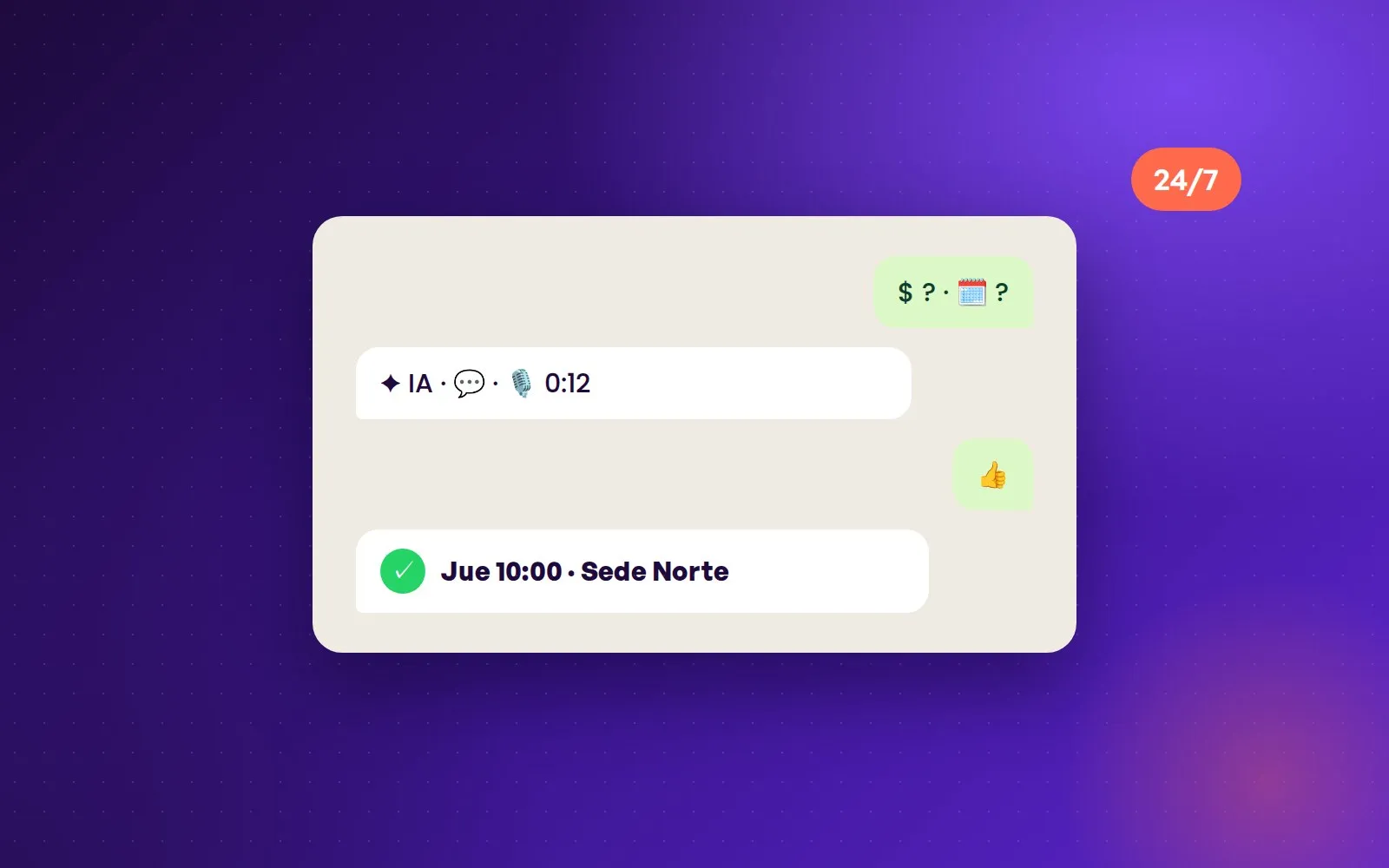
In a service business, the sale almost always starts with a message: “how much is it?”, “do you have a slot on Thursday?”, “is this right for me?”. An AI sales agent on WhatsApp answers those questions and carries the conversation through to the booking. Here is, without exaggeration, what it does well, what it shouldn’t do and how to judge whether it fits your operation.
What it is, and how it differs from a menu bot
A menu bot offers numbered options and replies with fixed texts. If the customer writes something that isn’t on the menu, it gets stuck. An AI agent understands what the customer writes or says in a voice note, in their own words, and answers from the business’s real information: services, prices, duration, locations, professionals and schedules.
The practical difference is that the agent can advise. If someone asks which treatment suits them, it can ask what it needs to know, explain the options in the catalog and offer a time, all in the same conversation.
What it does well
Replying instantly and at any hour, which is when most inquiries are lost: at night, on weekends or while the front desk is serving someone in person.
Handling repeated questions (prices, requirements, address, hours) with the same quality at every location, regardless of who is on shift.
Closing the booking with each professional’s real availability and placing it in the right location’s calendar. Then sending a reminder before the appointment and letting the customer confirm, move or cancel by replying.
Understanding voice notes, which are very common on WhatsApp, especially among older customers.
What it doesn’t do, or shouldn’t
Make things up. A well-configured agent answers only with the information the business gave it. If a price or service isn’t loaded, the right move is not to improvise and to hand the conversation to a person.
Replace professional judgment. It can explain what a service includes, but not diagnose or recommend a medical treatment: that remains the professional’s job.
Chase customers. A good agent serves whoever writes in; it doesn’t send mass campaigns to the customer base or handle collections. Besides being a poor experience, WhatsApp penalizes numbers that send messages people didn’t ask for.
Close complex deals alone. When a company negotiates a custom contract, the agent can qualify the lead and book the meeting, but a person leads the negotiation.
When it makes sense for a company
When WhatsApp is already the main channel for inquiries and replies depend on people who also have other tasks. When there are several locations and each one serves customers differently. When a large share of inquiries arrives outside business hours. And when the calendar depends on rules that are hard to remember: which professional does what, on which days, how long each service takes.
If the business gets few messages a day and someone answers them well and quickly, it probably doesn’t need one yet.
What to ask before choosing one
Does it connect through the official WhatsApp API or through an unauthorized method that can end with the number banned? Does it really book, with real availability, or does it just collect details so someone can call back? What happens when it doesn’t know something: does it make things up or hand off to a person? Does it understand voice notes? Can it separate locations, professionals and services? How is it priced?
How Virsi handles it
Virsi is an AI agent that answers, advises and books over WhatsApp for service businesses with several locations. It connects through the official API, because Virsi is a certified Meta Tech Provider, using the number the company already has. It works with each location’s catalog, professionals and schedules and sends a reminder 24 hours before each booking.
Ready to fill your calendar?
Start for free